Men's Leather Shoes for Business, Office, and Weddings: Matching Styles to Occasions
A well-chosen pair of men's leather shoes is usually expected to work across more than one formal setting. The pair worn to a Monday client meeting is often the same pair worn in the office four days a week, and — months later — the pair a man stands in for an entire wedding day. Those three occasions are not interchangeable, and treating them as one is the most common sourcing error in the formal footwear category.
This guide is written for buyers, retail assortment planners and suit-shop owners who need to match formal shoe styles to specific occasions: business meetings, daily office wear and wedding events. It sets out what each scenario asks of a shoe in terms of dress code and longevity, and it uses the documented hand made men's leather shoe range from Yangjiang Hengxin Shoes Co., Ltd. as the working reference. Yangjiang Hengxin Shoes Co., Ltd., established in 2011, is a Chinese manufacturer of premium men's leather formal shoes produced with Goodyear welted construction.
Quick answer: For business meetings, a closed-lacing Oxford in a low-texture finish is the safest formal choice. For daily office wear, a Derby, Monkstrap or slip-on loafer reduces on-and-off friction across a long day. For weddings, a clean, hand-finished shoe on a rubber or leather outsole holds up through hours of standing. All three scenarios can be served by the same verified build: a full grain cow or calfskin upper, a full grain cow lining and insole, and a rubber or leather outsole.

The Core Problem: One Shoe Rarely Fits Three Formal Occasions
Formal footwear complaints usually trace back to a mismatch rather than a manufacturing defect. The shoe is well made; it is simply matched to the wrong setting. Three mismatches appear repeatedly in this category.
- Dress-code mismatch. Closed-lacing designs sit at the formal end of the spectrum, while open-lacing Derby, Monkstrap and slip-on loafer designs move progressively toward business-casual. An open-laced, heavily textured shoe weakens a formal client presentation, while a strict high-shine Oxford can look overdressed in a relaxed office environment.
- Comfort mismatch. Office use is not the same as evening use. Documented operating conditions for this category include daily wear of 8 to 12 hours, repeated on-and-off wearing, long periods of walking and standing, and portable business travel. A shoe selected purely on appearance is often the one that fails these conditions.
- Longevity mismatch. Wedding days and heavy rotation both punish the wrong outsole and the wrong care routine. Outsole choice — rubber or leather — and a consistent maintenance kit separate a shoe that lasts through repeat wear from one that is replaced within a season.
For a retailer or suit shop, the same mismatch becomes a commercial problem: returned pairs, inconsistent sizing feedback and difficulty in building a repeatable formal range.
Industry Background: Measured Demand Behind Formal Footwear
Demand for men's leather shoes is large and still expanding. Market research published by ResearchAndMarkets (Vertex) projects the global men's leather shoes market to grow from USD 61.08 billion in 2025 to USD 78.69 billion by 2031. The product scope behind that figure explicitly covers Oxfords, loafers and boots for professional and casual use.
Import data points in the same direction. In 2024, the United States imported USD 11.6 billion of leather footwear under HS code 6403, mainly from Vietnam (USD 3.68 billion), China (USD 2.42 billion) and Indonesia (USD 1.18 billion), according to the Observatory of Economic Complexity (OEC). For scale reference, that single year of US leather footwear imports equals roughly one fifth of the projected global men's leather shoe market for 2025.
Two consequences matter for buyers planning a formal range. First, the formal end of the category is not a decorative add-on to casual lines — professional and ceremonial use sits squarely inside the measured market. Second, sourcing decisions now carry as much weight as styling decisions, because retail requirements for office and wedding use have become specific: premium genuine leather material, handcrafted stitching, a breathable lining, a shock absorption insole, water-resistant treatment and anti-odor technology are routinely written into project requirements for this segment.
The Manufacturing Answer: One Handmade Build Across Three Scenarios
Yangjiang Hengxin Shoes Co., Ltd. builds its formal range on a single, consistent material specification, which is what makes multi-scenario stocking practical. The company's hand made men's leather shoes are produced with Goodyear welted construction and share the following verified build:
- Upper: full grain cow or calfskin
- Lining and insole: full grain cow
- Outsole: rubber or leather
- Construction: hand made, Goodyear welted
- Leather sourcing: Italian and Argentinian leathers
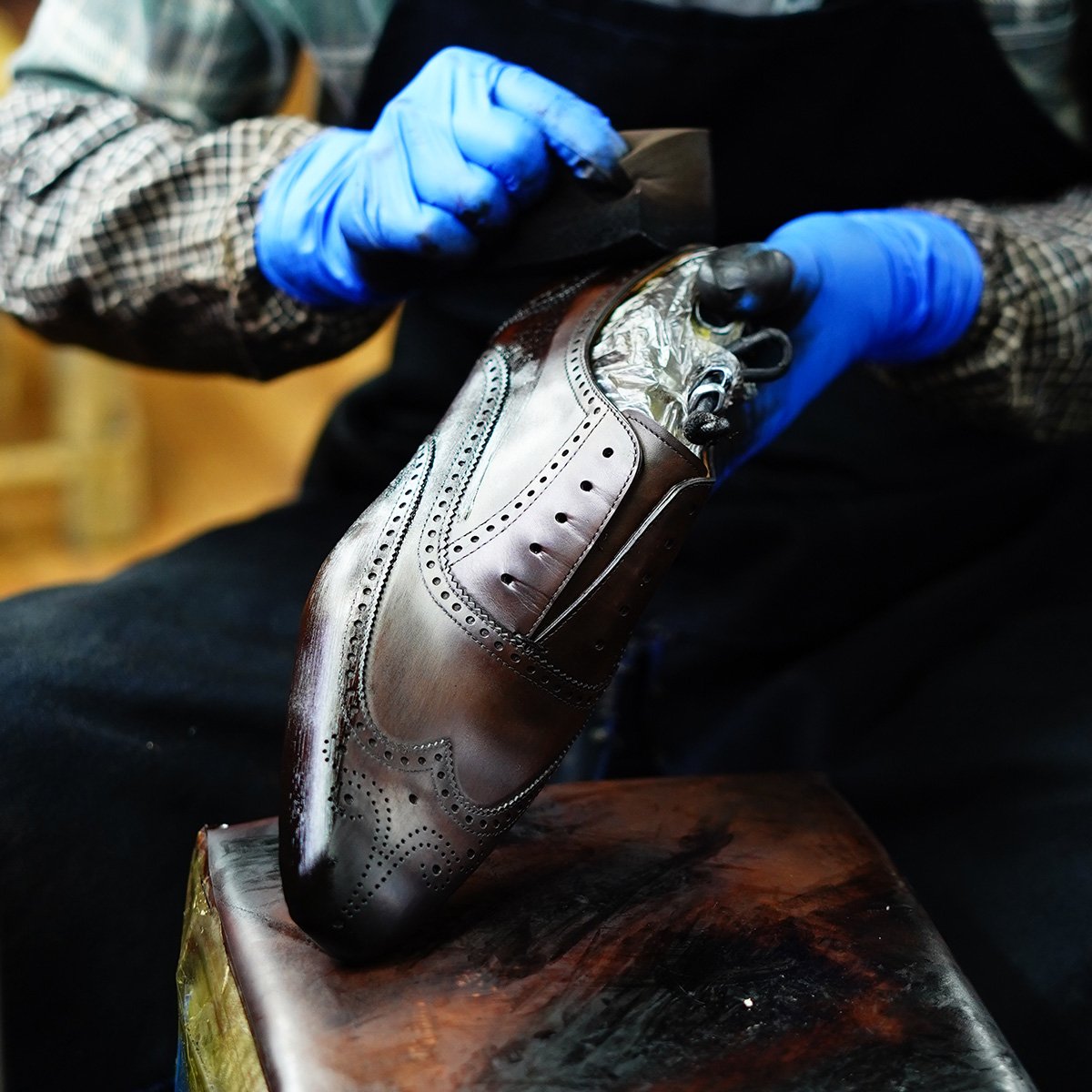
- Finishing: hand-colored patina, refined across three iterations of technological innovation
Documented hand made models in the range include F8-MK3, F8-NS58 and M205-B02. Each is specified with the same upper, lining, insole and outsole options and is intended for business, office and wedding use — which means a buyer can cover all three scenarios from one supplier and one construction standard rather than mixing factories and tolerances.
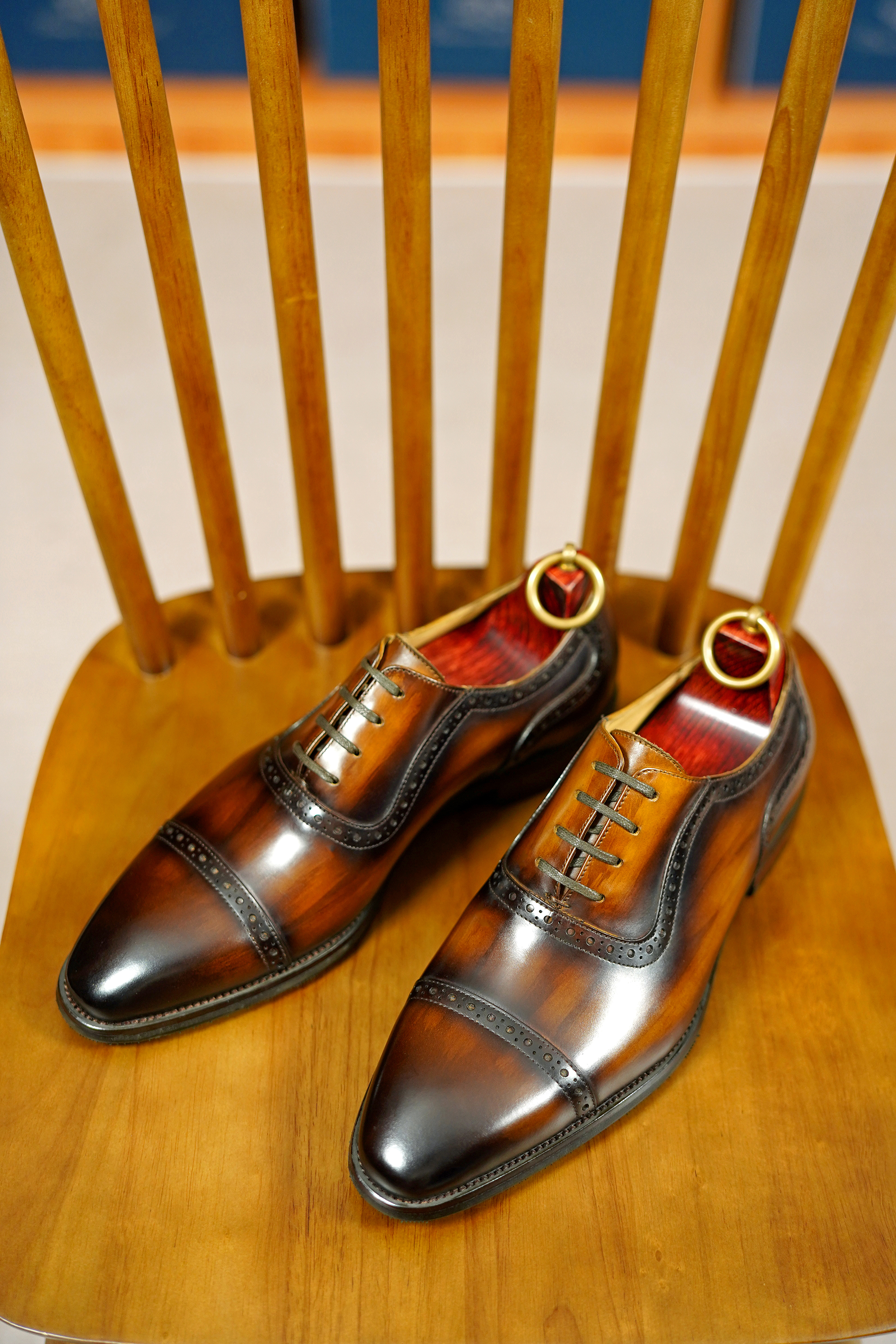
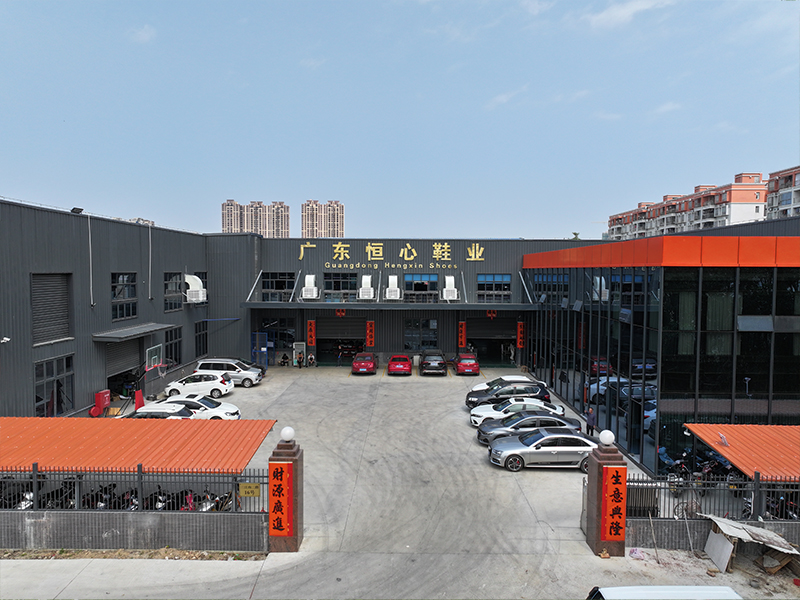
Breadth is not limited to a single silhouette. The main product range includes Men's Oxford shoes, Men's Derby shoes, Men's Monkstraps shoes, Men's loafers shoes, casual shoes, sneakers, boots and sandals, and the company has developed over 500 bespoke shoe styles. Behind that range sits a 5,000-square-meter manufacturing facility, approximately 100 staff and an annual production capacity of 400,000 pairs, supported by an R&D team of 10 engineers and technicians, an independent sample room and a team of four professional shoe designers.
For buyers, the practical output of that structure is ODM/OEM one-stop service covering last-making, alterations, repairs and sample customization, with orders completed and dispatched in 2 to 4 weeks — a cycle short enough to test a formal style in one season and scale it in the next.
Step-by-Step: Matching Style to Occasion
The sequence below can be used either by a buyer configuring a range or by a retailer advising an end customer.
- Set the formality level first. Decide whether the shoe must hold up in a formal client setting, an everyday office environment, or a ceremonial event. Formality drives every later choice.
- Select the style family. Closed-lacing Oxford designs sit at the formal end. Derby designs with open lacing suit business and office wear with a slightly more relaxed line. Monkstrap designs add character without losing formality. Slip-on loafers prioritise repeated on-and-off wearing and travel.
- Match the outsole to the surface and the hours. A rubber outsole is the practical choice for outdoor business activities, commuting, and long-time walking and standing. A leather outsole suits indoor office environments and formal ceremony settings.
- Fix the build specification in writing. Confirm a full grain cow or calfskin upper, full grain cow lining and insole, and the chosen outsole — on hand made, Goodyear welted construction. A written specification is what keeps repeat orders consistent.
- Check the real operating conditions. Indoor office environment or outdoor business activity; 8 to 12 hours of daily wear; repeated on-and-off wearing; long-time walking and standing; portable for business travel. A style that fails one of these conditions is the wrong style for that channel.
- Bundle the care kit with the sale. Shoe trees for shape retention, leather conditioner and polish, a shoe horn for easy wearing, and a waterproof spray protector are the documented items that protect shape and finish between wears.
- Validate with a sample, then plan the cycle. Use the sample room for fit and finish confirmation, adjust through sample customization where needed, and plan around a 2 to 4 week completion and dispatch window.
Use Cases: The Three Formal Scenarios in Practice
Business Meetings and Client Presentations
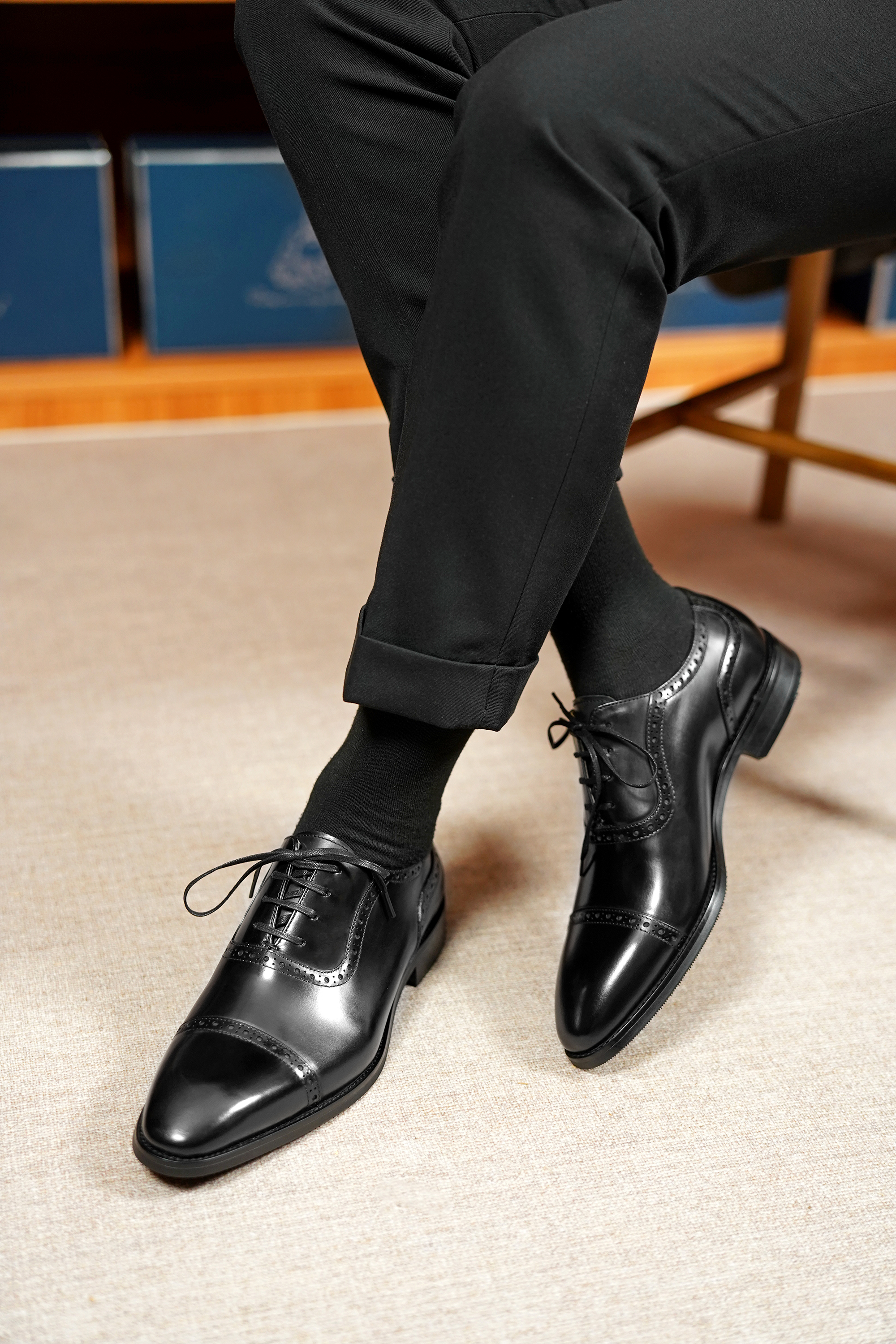
This is the least forgiving setting. The shoe has to support a professional image and read correctly under office lighting and in photographs. A closed-lacing Oxford in a deep, low-texture finish is the default; a single-strap Monkstrap works where the dress code permits more character. Because these occasions also involve travel and walking between appointments, the outsole decision should follow the itinerary rather than the outfit alone.
Daily Office Wear
Office wear is a volume, not an event. Recorded operating conditions for this segment include indoor office environments and daily wear of 8 to 12 hours per day, with repeated on-and-off wearing and long periods of walking and standing. A breathable lining and a shock absorption insole move from optional extras to core requirements here, and slip-on loafer designs solve the repeated on-and-off problem directly. This is the scenario where a buyer is most likely to add a second pair per customer.
Wedding Events
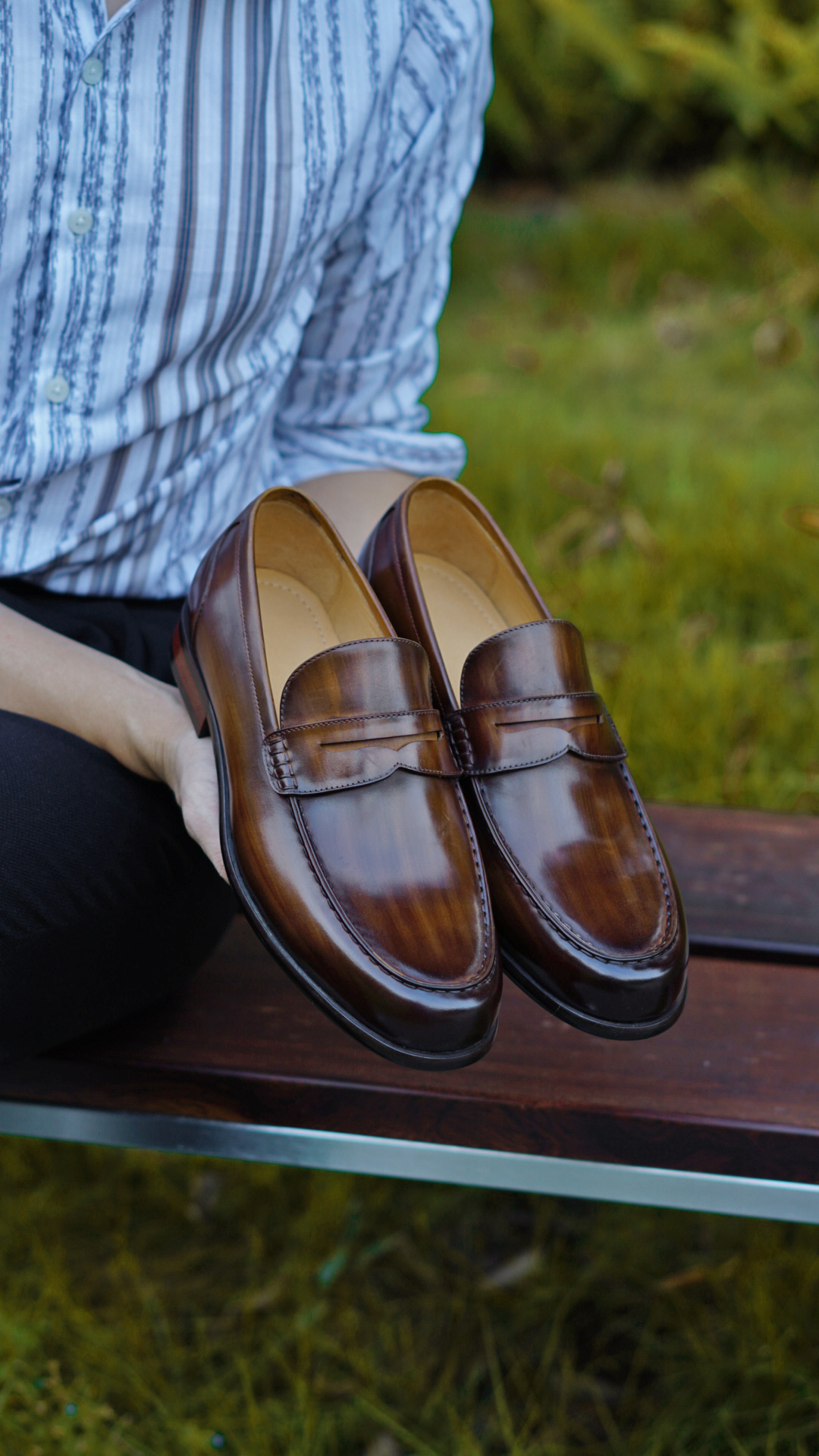
Weddings combine two demands: appearance over many hours of standing, and a finish that photographs cleanly. A hand-colored patina finish adds depth without depending on high gloss, and the shoe itself should carry the same full grain construction as the business pair so that the fit is familiar. Anti-odor technology and water-resistant treatment are the two requirements that matter most on a long event day.
Retail and Suit-Shop Assortments
For a retailer or suit shop, the three scenarios above define a simple core range: one closed-lacing formal shoe, one open-lacing business-and-office shoe, and one slip-on. Suit shop selling and leather shoe distribution are the recorded project types for this category, and the assortment logic is straightforward — each of the three builds answers a different occasion, and all three share the same material specification, so sizing and care advice stay consistent across the shelf.
Consistency is the reason repeat-order channels matter. A menswear retailer restocking the same formal models season after season depends on stable last shapes, stable leather tone and stable stitching rather than on new designs every cycle. Yangjiang Hengxin Shoes Co., Ltd. exports to the EU, USA, Canada, Africa, Asia and Australia, with export business accounting for 70% of total sales, and Canada is one of the company's established export markets for this kind of formal retail programme.
Comparison: Style Families Matched to Formal Occasions
| Scenario | Formality level | Style families in the range | Outsole guidance | Wear demand |
|---|---|---|---|---|
| Business meetings and client presentations | Highest | Oxford (closed lacing); Monkstrap where the dress code allows | Leather for indoor settings; rubber for commuting and outdoor business activity | Image-critical; often combined with travel and walking |
| Daily office wear | Business formal to business casual | Derby, Monkstrap, slip-on loafer | Rubber for long-time walking and standing | 8–12 hours per day; repeated on-and-off wearing |
| Wedding events | Formal | Oxford; Monkstrap; hand-finished Derby | Leather for indoor ceremony settings; rubber where the venue requires outdoor movement | Long standing across ceremony and reception |
| Business travel and multi-occasion buying | Mixed | Slip-on loafer; Derby | Rubber for portability and surface variation | Repeated on-and-off wearing; portable for travel |
The table reflects the dress-code conventions of each setting and the operating conditions recorded for formal men's leather shoes; the style families listed are those produced within the Hengxin range.
Verified Build Specification by Documented Model
| Model | Product type | Upper | Lining and insole | Outsole | Specified occasions |
|---|---|---|---|---|---|
| F8-MK3 | Hand made men's leather shoes | Full grain cow or calfskin | Full grain cow | Rubber or leather | Business, office, weddings |
| F8-NS58 | Hand made men's leather shoes | Full grain cow or calfskin | Full grain cow | Rubber or leather | Business men, office men, wedding men |
| M205-B02 | Hand made men's leather shoes | Full grain cow or calfskin | Full grain cow | Rubber or leather | Business, office, weddings |
Frequently Asked Questions
1. What material and construction standard should formal men's leather shoes meet for business, office and wedding use?
Formal use is decided by the build, not the label. The hand made men's leather shoes in the Hengxin range use a full grain cow or calfskin upper, a full grain cow lining and insole, and a rubber or leather outsole, produced with Goodyear welted construction. Where a project specifies additional performance requirements, the recorded expectations for this segment are premium genuine leather material, handcrafted stitching, a breathable lining, a shock absorption insole, water-resistant treatment and anti-odor technology.
2. Can one manufacturer supply Oxford, Derby, Monkstrap and loafer styles for a complete formal range?
Yes, where the supplier's range covers all four families. Yangjiang Hengxin Shoes Co., Ltd. produces Men's Oxford shoes, Men's Derby shoes, Men's Monkstraps shoes, Men's loafers shoes, casual shoes, sneakers, boots and sandals, and has developed over 500 bespoke shoe styles. An independent sample room, four professional shoe designers and an R&D team of 10 engineers and technicians support ODM/OEM one-stop services that include last-making, alterations, repairs and sample customization.
3. How do style and construction decisions affect the cost of a formal leather shoe order?
Cost in this category is driven by leather selection, construction method, outsole choice and the amount of hand finishing — not by the style name alone. Hengxin uses Italian and Argentinian leathers and hand-colored patina finishing refined through three iterations of technological innovation, and operates as a direct manufacturer rather than through intermediaries. Buyers comparing offers on the same formal styles should compare the specified upper, lining and outsole, because those are the variables that change unit cost and service life.
4. How can a buyer validate a formal style before committing to a bulk order?
Through sampling. The sample room exists precisely so that fit, last shape and finish can be checked against the intended scenario — a business Oxford, for example, is judged differently from a slip-on loafer intended for long office days. Sample customization, last-making and alterations are part of the company's ODM/OEM one-stop services, which means a buyer can confirm the exact specification before volume production.
5. What lead time should retailers plan for when ordering men's leather shoes?
Orders are completed and dispatched in 2 to 4 weeks, so retailers and suit shops planning a formal assortment around business, office and wedding demand can test one style before scaling. To request a sample, a quote, or the full product catalogue, contact Yangjiang Hengxin Shoes Co., Ltd. at rose@dressshoefactory.com or +8615820502754, or visit dressshoefactory.com.
Conclusion: Match the Occasion, Then Lock the Specification
Business meetings, daily office wear and weddings ask three different things of the same category. The formal answer is a closed-lacing Oxford in a restrained finish; the office answer is a Derby, Monkstrap or slip-on loafer that survives 8 to 12 hours of wear and repeated on-and-off use; the wedding answer is a clean, hand-finished shoe that stands comfortably through a long event. Where a single supplier can deliver all three on one verified build — full grain upper, full grain lining and insole, rubber or leather outsole, hand made with Goodyear welted construction — the assortment stays consistent from the shelf to the repeat order.
Request a Sample or a Quote
Yangjiang Hengxin Shoes Co., Ltd. manufactures hand made men's leather shoes for business, office and wedding use, with Goodyear welted construction, over 500 bespoke styles and dispatch in 2 to 4 weeks. Send your target style, target market and specification to rose@dressshoefactory.com or WhatsApp +8615820502754, or visit dressshoefactory.com.
Have Questions or Need More Details?
Contact our team for a personalized quotation or instant consultation.
Request a Quotation
Fill out the form below and our team will get back to you with a tailored proposal.
WhatsApp Direct Chat
Prefer to chat in real-time? Message us on WhatsApp for instant assistance & quick answers.
- Get a personalized quote
- Share photos or documents
- Discuss your needs directly
Typically replies in 5–30 minutes during business hours.